English
 中文简体
中文简体 русский
CF40 Automatic CNC Polygon Turning Machine Lathe
Cat:Small Polygon Lathe
The CF40 Automatic CNC Polygon Turning Machine Lathe is specifically designed for small to medium-sized, high-precision parts milling, enabling the ma...
See Details


Accurate manufacturing begins with clear communication. Overseas buyers who request quotations for custom machine tools or machining-related projects need to provide enough technical and commercial information for a supplier to assess the actual requirements. An incomplete request may leave important questions about specifications, configuration, production capacity, and acceptance criteria unanswered.
At Juxing, we understand that every project has its own application requirements. As a CNC machine tool manufacturer specializing in CNC lathes, polygon lathes, turning and milling compound machines, and automation equipment, we review customer drawings, samples, and processing needs to develop suitable equipment solutions. A well-prepared cnc machining china factory enquiry gives our team a clearer understanding of the project and creates a practical starting point for technical communication.
Whether your business plans to purchase CNC equipment for automotive components, pneumatic and hydraulic accessories, plumbing products, or valve manufacturing, the following checklist can help you prepare a more useful request for quotation (RFQ).
Drawings and digital models communicate the geometry, dimensions, and functional requirements of a component. They also help our engineering team understand which machining operations may be necessary.
Consider a metal component with an external diameter of 25 mm, a length of 80 mm, and an M12 threaded section. These dimensions provide a useful starting point, but the drawing should also specify the required tolerances, thread pitch, material, and any critical interface dimensions. The figures are illustrative rather than specifications for a particular Juxing machine.
Submit the latest approved files and clearly identify the governing document. A 3D model may describe the nominal shape, while a 2D drawing defines additional inspection and manufacturing requirements. Any conflict between the files should be resolved before the quotation is finalized.
Material selection influences cutting behavior, tooling requirements, surface quality, and the processing method. Describing a component simply as aluminum, steel, or stainless steel may not provide enough information for a meaningful technical assessment.
For example, a long cylindrical shaft may require a different workholding arrangement from a short hexagonal fitting. A component made from stainless steel may also require different cutting conditions from an aluminum part of similar dimensions.
At Juxing, we use workpiece characteristics and intended applications as part of the equipment assessment. Clear material information helps us discuss spindle requirements, clamping methods, tool arrangements, and possible machine configurations with the customer.
Not every dimension has the same functional importance. A tolerance controls the permitted variation in a measured feature, so it should reflect the component's assembly and operating requirements.
A shaft with a nominal diameter of 20 mm and a specified tolerance of ±0.01 mm has a permitted dimensional range of 19.99–20.01 mm. This example illustrates why a nominal diameter alone cannot define the complete machining requirement.
Tight tolerances can affect machine configuration, cutting tools, workholding stability, and measurement procedures. Marking functional dimensions clearly allows our team to distinguish essential accuracy requirements from general dimensions and discuss a suitable processing approach.
Part geometry helps determine whether a conventional CNC turning machine, a polygon lathe, or a turning and milling compound machine may be suitable. The RFQ should explain the required features rather than relying solely on a broad product description.
For example, a valve fitting may require external turning, a threaded connection, and a hexagonal wrenching section. Describing these features helps us assess whether a standard turning configuration or a specialized machining solution deserves further consideration.
Juxing develops CNC turning, polygon machining, and compound turning-milling equipment for different workpiece requirements. Our technical discussion can focus on the processing sequence, machine structure, tooling arrangement, and automation needs associated with the customer's application.
Order volume affects equipment planning, tooling arrangements, automation decisions, and the commercial structure of a project. Buyers should describe both the immediate requirement and any reasonably anticipated production demand.
Consider a factory planning to manufacture 500 fittings per shift across three component designs. This information gives a different planning context from a workshop producing 500 pieces of a single design each month. Actual machine requirements depend on cycle time, setup duration, operator availability, cutting conditions, and the desired production schedule.
Providing a realistic demand profile helps us discuss suitable machine configurations and possible automation arrangements without making assumptions about the customer's operating conditions.
Quality expectations should be documented before the project reaches the quotation and order-confirmation stages. Clear acceptance criteria help both parties understand how the finished equipment or machined components will be evaluated.
Equipment buyers should distinguish machine specifications from the dimensional requirements of the parts produced on that machine. For example, a machine's positioning specification does not automatically guarantee that every finished component will meet a particular tolerance. Material behavior, tooling, fixturing, thermal conditions, and process setup also influence the result.
Our team can use clearly defined acceptance requirements to clarify the intended scope of technical evaluation and identify any additional testing or documentation that should be discussed before order confirmation.
A quotation based only on the main machine may not cover every item needed to establish a functioning production process. Buyers should identify accessories, tooling, and integration requirements as part of the RFQ.
For a production line manufacturing small metal fittings, the selected machine may need to work with a compatible bar feeder, workholding system, and automated part-handling arrangement. Providing these details allows the equipment scope to be reviewed as a complete production solution rather than an isolated machine purchase.
Technical suitability is only part of an equipment purchasing decision. Overseas buyers should also specify the delivery conditions and commercial requirements that affect the project schedule and total expenditure.
A machine quotation and a delivered-and-installed project quotation may cover different cost items. Asking for a clear breakdown makes it easier to compare proposals on the same basis. Buyers should also request confirmation of the proposed manufacturing schedule and identify any dependencies, such as drawing approval, customized tooling, or factory acceptance testing.
Before submitting the enquiry, review the files and written requirements together. Small inconsistencies can create substantial uncertainty during engineering review and commercial discussions.
At Juxing, we welcome enquiries supported by drawings, samples, and clear descriptions of the intended application. Our experience with CNC lathes, polygon machining equipment, compound turning-milling machines, and customized automation solutions enables us to discuss project requirements with attention to the workpiece and production process.
A useful CNC machining RFQ should explain what needs to be produced, which technical requirements matter, how quality will be evaluated, and what the buyer expects from the commercial arrangement. Drawings, material grades, tolerances, machining operations, production demand, inspection criteria, accessories, and delivery conditions each contribute to a clearer quotation scope.
Juxing works with customers to review their drawings or samples and discuss equipment configurations according to their processing needs. Rather than relying on a general machine description, provide the details that define your actual application. This gives our team a stronger basis for evaluating suitable CNC equipment, clarifying technical questions, and preparing a proposal aligned with your production plans.
Preparing an RFQ now? Visit our CNC machine product range to review available machine categories, then contact Juxing with your drawings, workpiece details, and production requirements to begin a technical discussion.
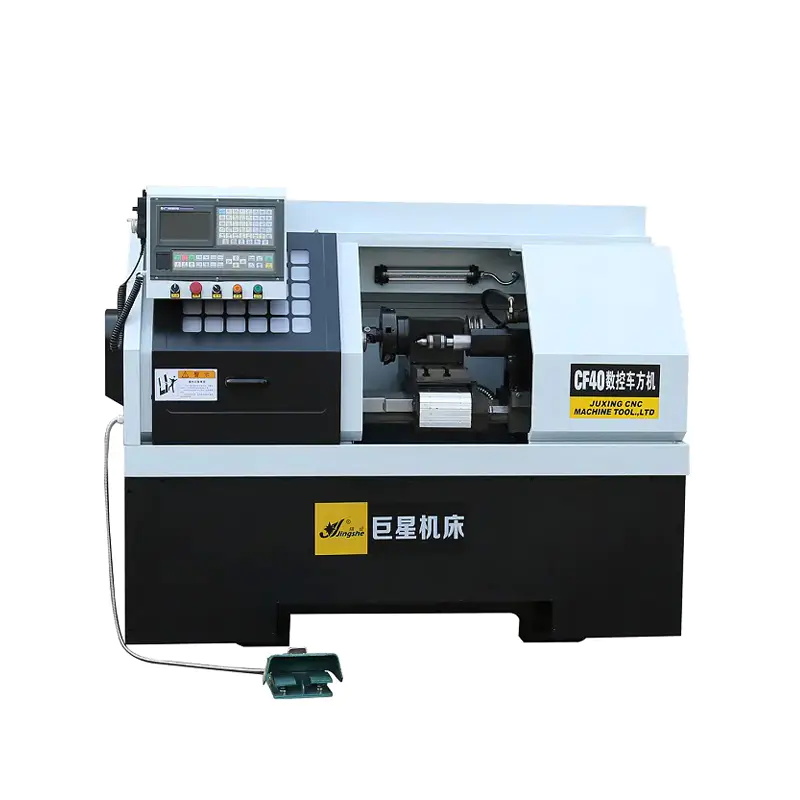
The CF40 Automatic CNC Polygon Turning Machine Lathe is specifically designed for small to medium-sized, high-precision parts milling, enabling the ma...
See Details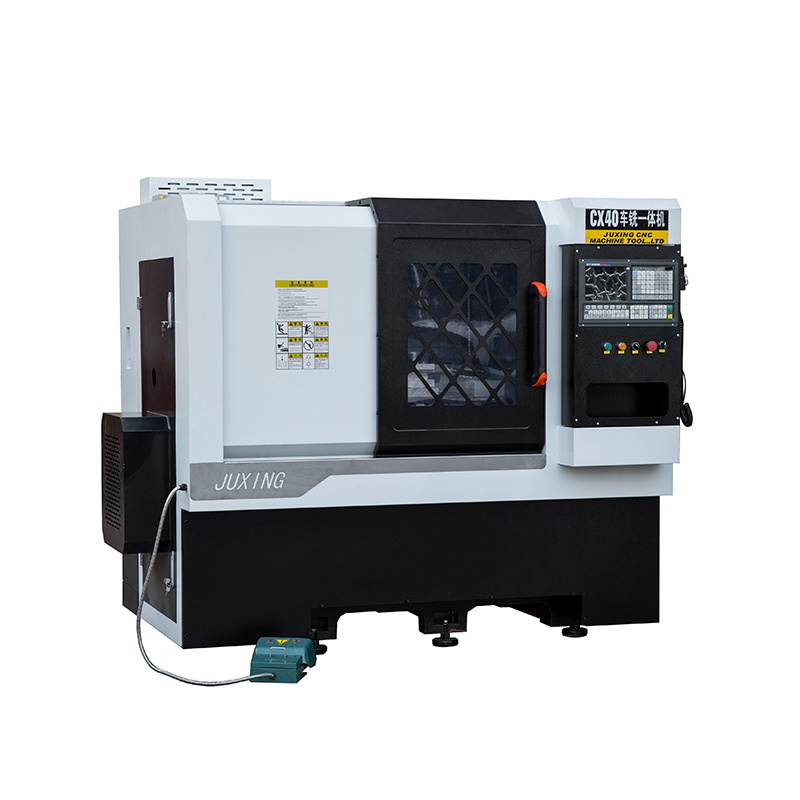
The CX40 High Precision Linear Track Horizontal CNC Lathe Machine is designed to provide exceptional performance and versatility for precision machini...
See Details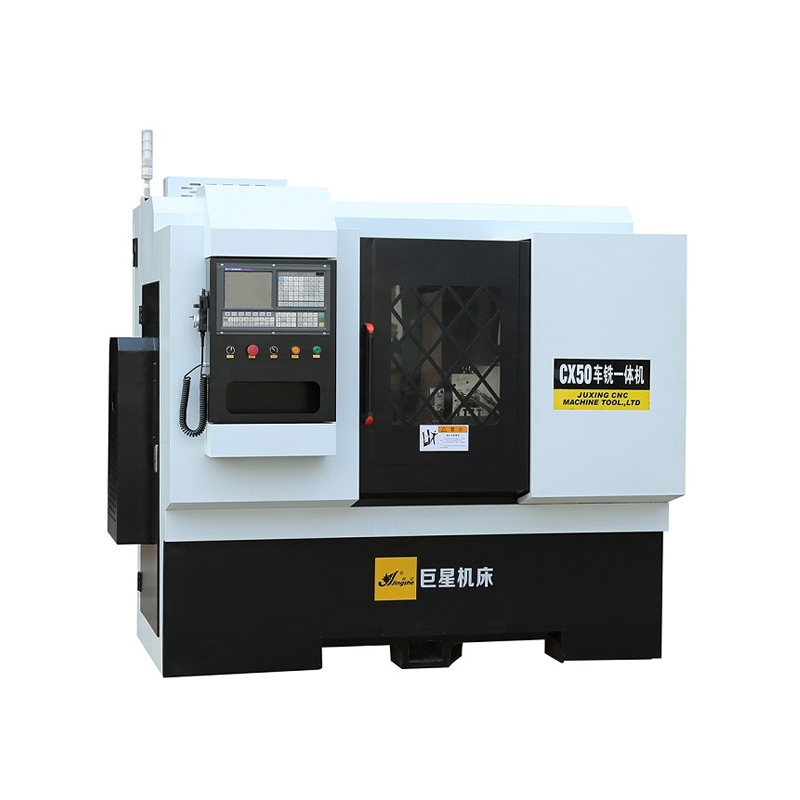
Are you looking for a machine that combines the capabilities of a CNC lathe and a square lathe? Look no further! Introducing the CX50 New CNC Turning ...
See Details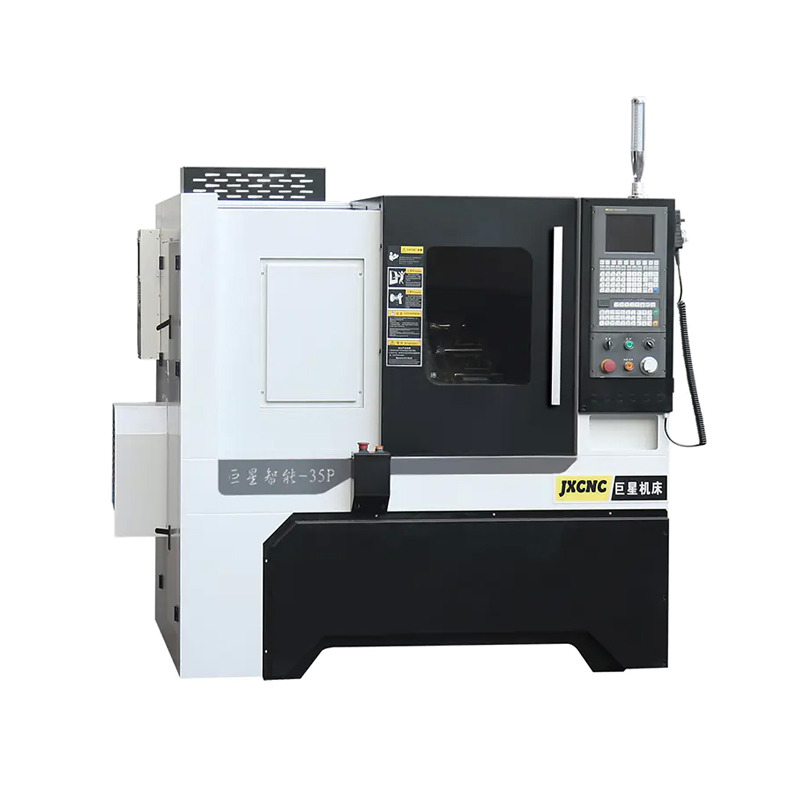
The JX35P CNC Hiwin Linear Guide Machine with High Precision is a reliable and robust solution for various machining applications. With its horizontal...
See Details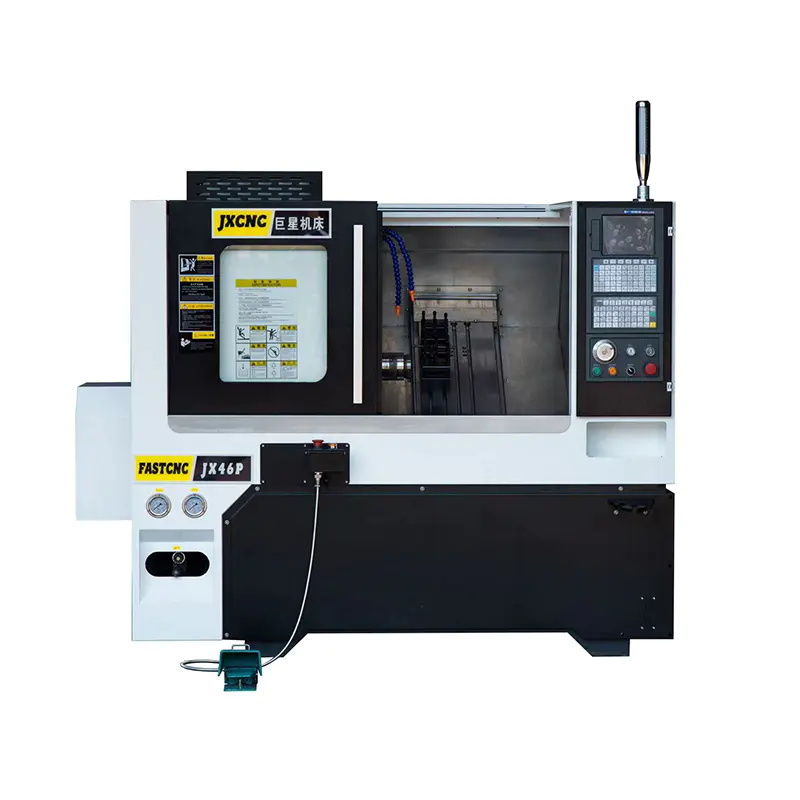
The JX46P Slant Bed CNC Lathe Machine of Cast Iron Machine Base is a high-performance machine tool designed for various machining operations. With its...
See Details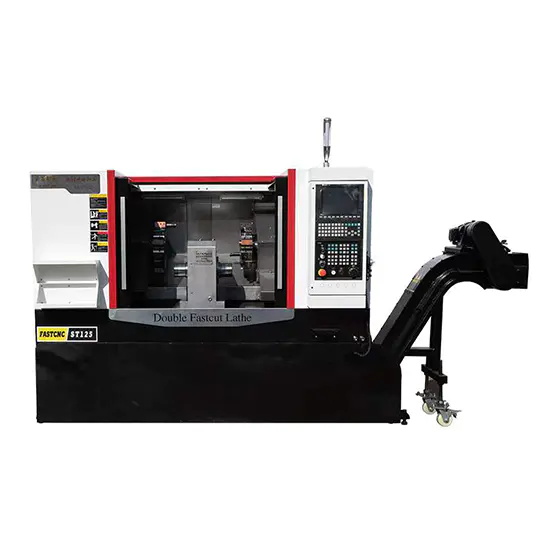
The JX125 Double Head CNC Machine is a cutting-edge machine tool that utilizes a central spindle, two Z-axes, two X-axes, and bidirectional drag plate...
See Details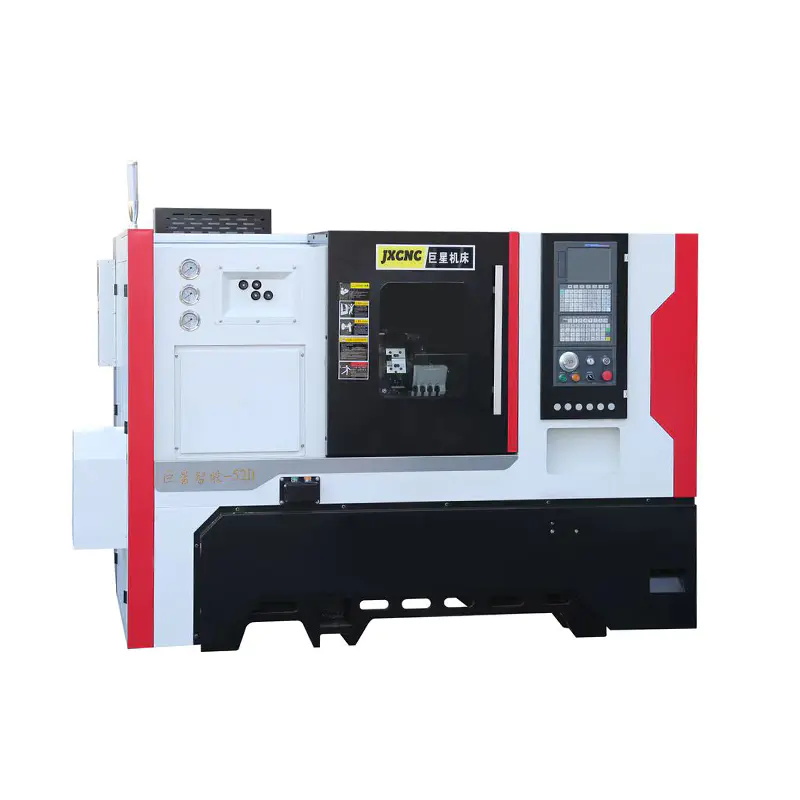
The JX52D Machine Tool CNC Lathe is specifically designed for lathe every kinds of material with precision and efficiency. It is equipped with advance...
See DetailsTEL : +86-576-87491531
FAX : +86-576-87493038
E-MAIL : chinajuxing@aliyun.com
ADDRESS: Longxi Industrial Zone, Yuhuan City, Taizhou City, Zhejiang Province, China
CopyrightTaizhou Yestar Intelligent Equipment Co., Ltd. All Rights Reserved.